Virginia This Week — Week of October 17, 2026
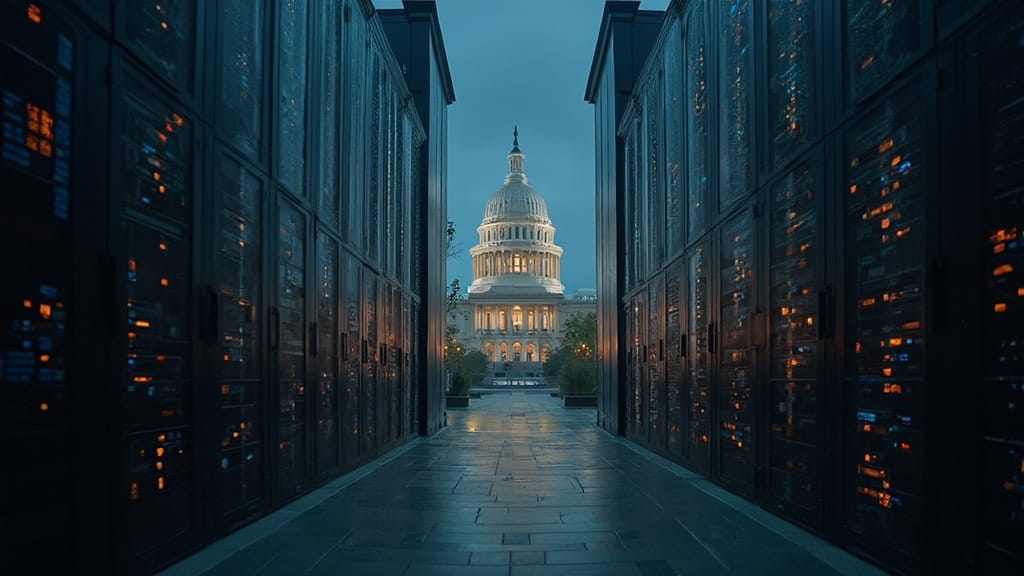
Photo: virginiathisweek.com
Sen. Russet Perry filed SB 843, a bill that would bar localities from approving new data-center rezonings, special exceptions, special use permits and site plans from July 1, 2027 through...
Sen. Russet Perry filed SB 843, a bill that would bar localities from approving new data-center rezonings, special exceptions, special use permits and site plans from July 1, 2027 through July 1, 2030, and would also block DEQ and the SCC from issuing related permits during that window. Sen. Danica Roem of Prince William is co-filing, with a separate proposal that would tie approvals to Dominion Energy's large-load interconnection queue. Del. Irene Shin's carried-over House proposal would pause local approvals until pending distribution-service requests are fulfilled or July 2028. Virginia Mercury reports the bills stack directly on top of a legislative push to put a new tax on data centers inside the emerging $205 billion state budget.
The timing was not accidental. Virginia, Maryland and the District were under a regional power-grid emergency during the same week. The event was regional, not solely attributable to data centers, but it handed moratorium sponsors a concrete reliability moment to cite. The Data Center Coalition counters with $80.56 billion in Virginia investment and $5.34 billion in state and local taxes — numbers that frame Gov. Abigail Spanberger's October 1 energy plan, which analysts said names the load-growth problem without resolving who pays for the fix.
The SCC entered the same storm from the regulatory side. The Dominion-NextEra merger case is deep into public hearing season, with local hearings already held in Newport News on October 7 and Fairfax County on October 9, oral argument on a motion to compel on October 15, public witness testimony scheduled for early November and an evidentiary hearing starting November 17, per the SCC merger page. The SCC's active-comment docket is simultaneously packed with Dominion's Rider RGGI petition, Appalachian Power transmission cases and Dominion transmission projects affecting Fauquier, Prince William and Loudoun.
What to watch: Loudoun supervisors are still weighing whether to narrow grandfathering protections for pending projects, and the county is seeking a legal opinion first, per Virginia Business. If the moratorium bills survive committee in January while Loudoun tightens grandfathering and the SCC issues a merger order in parallel, Virginia will enter 2027 with its land-use, utility-ownership and rate-allocation debates all moving at once — three halves of one problem.
Spanberger announced that M.C. Dean will invest $412.5 million to expand its Modular Mission Critical manufacturing campus in Caroline County, creating 1,950 new jobs, per the Governor's...
Spanberger announced that M.C. Dean will invest $412.5 million to expand its Modular Mission Critical manufacturing campus in Caroline County, creating 1,950 new jobs, per the Governor's Office. The state's incentive package — up to $45 million through the Major Employment and Investment Project Approval Commission — requires General Assembly approval, which will land on legislators' desks in the same session that will take up Perry's moratorium bill and the data-center tax.
What M.C. Dean actually builds matters. The company manufactures the modular, mission-critical infrastructure that goes inside data centers and defense technology installations. Virginia is subsidizing the supply chain for the industry that other arms of state government are trying to slow down. The pairing is not necessarily a contradiction — the state can plausibly want manufacturing jobs in Caroline while pausing hyperscale buildouts in Loudoun — but legislators will have to defend both positions out loud in January.
The project also fits a broader pattern. The Virginia Economic Development Partnership released the M.C. Dean news alongside a Walashek Industrial & Marine expansion in Norfolk, a 40-job maritime repair and maintenance project. Together the announcements sketch an economic-development strategy centered on strategic industrial capacity — critical-tech manufacturing inland, naval and port supply chain on the coast — rather than generic office jobs. The state is also promoting its No. 1 workforce training ranking, tying the Caroline incentive to a labor-market story.
What to watch: whether the $45 million MEI appropriation moves cleanly in the January session or becomes a leverage point in the moratorium and data-center tax debates. If legislators approve the M.C. Dean money while taxing the hyperscalers it supplies, Virginia will have formally split its data-center policy in two.
A new U.S. Department of Health and Human Services rule took effect October 13, barring federal Medicaid and CHIP funds from supporting certain gender-affirming care for patients under 18...
A new U.S. Department of Health and Human Services rule took effect October 13, barring federal Medicaid and CHIP funds from supporting certain gender-affirming care for patients under 18, and under 19 for CHIP. Virginia hospitals have already kept transgender services for patients younger than 19 on hold for more than a year following a January 2025 executive order, per Virginia Mercury. The federal rule now gives hospitals a reimbursement reason to continue what they were already doing for political and liability reasons.
Virginia is one of 22 states suing to block the federal rule. The ACLU of Virginia argues that the Commonwealth could backfill the lost coverage with state funds, per WTOP. That argument puts the question squarely on Spanberger and the General Assembly: is Virginia willing to spend state dollars to replace defunded federal coverage for a politically fraught category of care?
The fiscal frame is sobering. The Spanberger administration estimates that broader federal changes to Medicaid and related social services could reduce Virginia revenue by $2 billion to $6 billion beginning in 2028. The transgender-care decision is not a stand-alone question — it is the first visible test of how Virginia responds when Washington pulls back on specific coverage categories. The answer sets a template for every subsequent federal rollback the state faces.
What to watch: whether an ACLU-style state-funding argument appears in a January bill, and whether the 22-state lawsuit produces a preliminary injunction before Virginia hospitals have to make budget decisions for the next fiscal year.
Arlington County filed suit opposing President Donald Trump's proposed Triumphal Arch, becoming the first governmental body to take legal action against the project, per WTOP/AP. The...
Arlington County filed suit opposing President Donald Trump's proposed Triumphal Arch, becoming the first governmental body to take legal action against the project, per WTOP/AP. The project had received early approval from the U.S. Commission of Fine Arts, whose members were appointed by Trump, but questions over authority, historic resources and federal review remain unresolved. Arlington's suit stacks on separate litigation arguing that congressional approval is required.
The suit is notable less for what it demands than for who filed it. Arlington contains Arlington National Cemetery, the Pentagon and a dense catalogue of nationally significant federal sites. A county government going to court against the White House over a monument project is a meaningful escalation in federal-local relations in Northern Virginia, where every planning decision touches federal land, federal workers or federal infrastructure.
It also fits a broader Virginia pattern this week. Loudoun is pushing back on data-center grandfathering. Fauquier has restricted new data centers. Perry's SB 843 would statewide what counties are doing locally. Jones launched a Voter Protection Section to backstop ballot access against federal pressure. In every case, Virginia governments at various levels are asserting authority against decisions coming from Washington or from markets Washington has shaped.
What to watch: whether a federal court consolidates the Arlington suit with the congressional-authority suit, and whether other Northern Virginia localities join. The procedural question is dry; the political signal is not.
Attorney General Jay Jones announced a new Voter Protection Section on October 13 to investigate voting barriers, enforce election laws and respond to complaints involving registration...
Attorney General Jay Jones announced a new Voter Protection Section on October 13 to investigate voting barriers, enforce election laws and respond to complaints involving registration cancellations, absentee ballot denials, intimidation and interference with election administration, per Virginia Mercury. The unit launched three weeks before the November 3 midterms. The White House responded to the announcement.
The signal is institutional, not rhetorical. Jones is pre-positioning an enforcement apparatus before voting begins at scale. Virginia is already reporting substantial increases in early voting, with same-day registration drawing greater use among college students, per Virginia Mercury. Turnout mechanics will shape Sen. Mark Warner's reelection race against Republican Bert Mizusawa and tight congressional contests across the Commonwealth.
The combination — a new state enforcement unit, rising early vote, contested congressional races — means election-administration disputes this cycle will not stay administrative. They will land in a formal AG channel almost immediately.
What to watch: the first high-profile complaint the Voter Protection Section accepts for investigation. Whichever locality that complaint names will shape the political read on the unit's purpose.
Virginia's kindergarten-readiness rate rose from 51% in 2025 to 57% in 2026, with gains among Latino, Black, low-income, English learner and disabled children, per Virginia Department of...
Virginia's kindergarten-readiness rate rose from 51% in 2025 to 57% in 2026, with gains among Latino, Black, low-income, English learner and disabled children, per Virginia Department of Education data cited by Virginia Mercury. The statewide average quality score across 3,220 early-learning sites serving more than 125,000 children rose to 594 out of 800, and the number of sites requiring state intervention fell to a record-low 10.
The six-point gain is real, but 57% means a substantial majority of Virginia children still do not meet the state's benchmark at the start of kindergarten. The data will intensify questions about sustained early-childhood funding in the next budget, especially as the state weighs incentive packages like Caroline County's $45 million.
On the other end of the education stack, a state watchdog warned that Virginia's information-technology agency is "falling short" on AI oversight, per Virginia Public Media as noted in a Virginia Mercury roundup. Fairfax County responded on its own, rolling out a Google AI blocker on school-issued laptops to stop students from receiving AI-generated answers and summaries. The pattern is familiar: localities moving while Richmond studies.
What to watch: a joint subcommittee on elementary and secondary education funding is scheduled for October 26, per the General Assembly interim-studies calendar. Whether the readiness gains translate into sustained funding commitments — or get folded into a budget squeezed by federal Medicaid losses — will shape next year's early-childhood policy.
Backyard homes get easier. New Virginia laws aim to make accessory dwelling units easier to build, per Virginia Mercury's roundup — a quiet shift that matters most in Northern Virginia and...
- Backyard homes get easier. New Virginia laws aim to make accessory dwelling units easier to build, per Virginia Mercury's roundup — a quiet shift that matters most in Northern Virginia and growing suburbs where ADUs can add family housing without rezoning fights.
Southwest and Southside health upgrade. Health organizations in Southwest and Southside Virginia received nearly $4 million in federal grants to boost technology and cybersecurity, per...
- Southwest and Southside health upgrade. Health organizations in Southwest and Southside Virginia received nearly $4 million in federal grants to boost technology and cybersecurity, per Cardinal News as noted in the same Virginia Mercury roundup.
Virginia Gun Rights Rally. The annual rally took place this week, a recurring political signal on Second Amendment advocacy against Virginia's shifting electoral landscape, per Virginia...
- Virginia Gun Rights Rally. The annual rally took place this week, a recurring political signal on Second Amendment advocacy against Virginia's shifting electoral landscape, per Virginia Mercury.